How to perfectly measure your windows
Accurate measuring is essential for perfectly fitting window decoration and depends on the type of product.
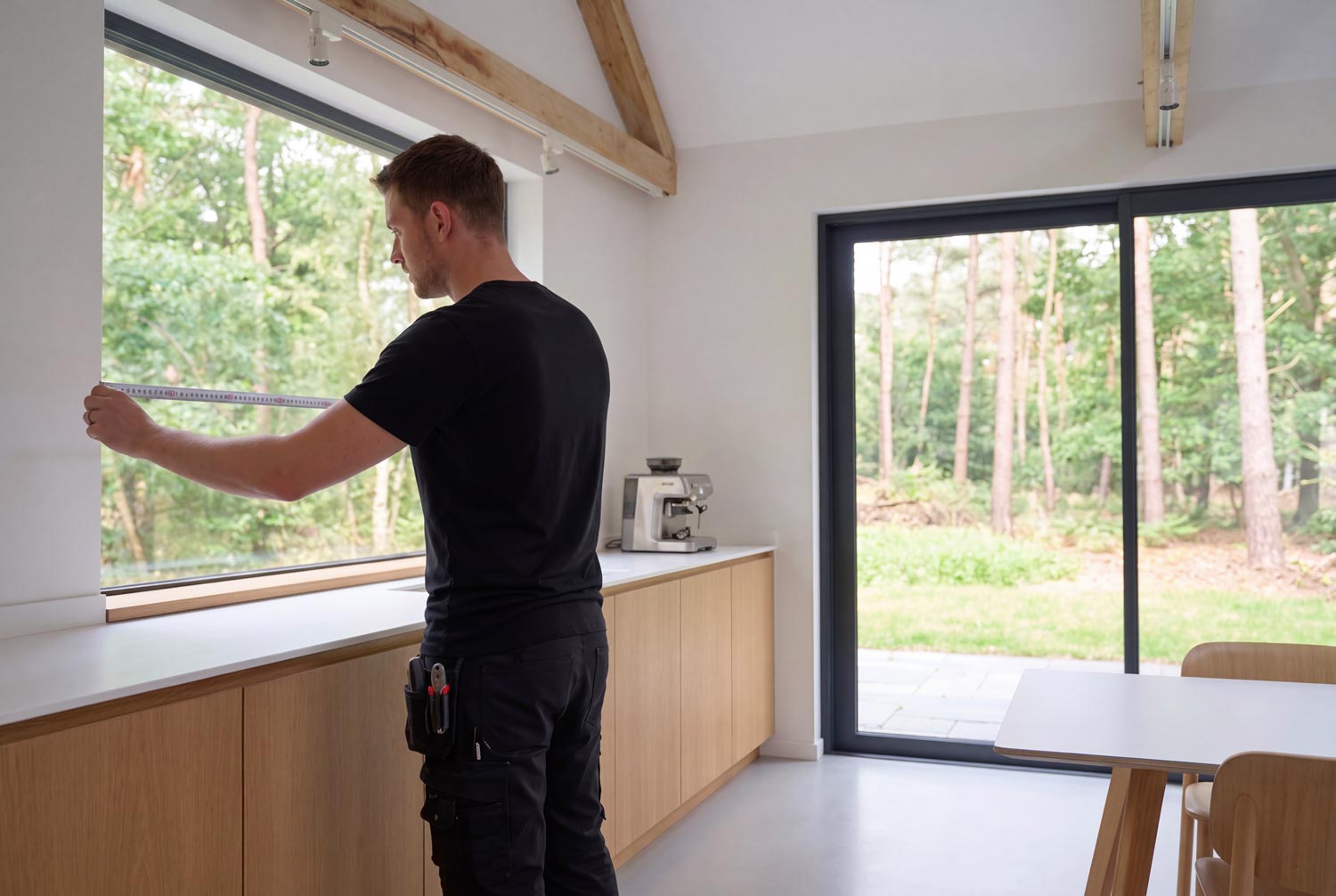
A good measurement is the difference between window treatments that look stunning and a result you're not entirely happy with. Yet this is where things often go wrong: too wide, too narrow, or just not high enough. In this article, you'll learn step by step how to correctly measure each window.
Inside or outside mount?
Before you start measuring, you need to decide whether you want to mount your window treatment inside the window frame (inside mount) or outside the frame on the wall (outside mount). For inside mount, you measure the interior of the frame. For outside mount, you measure wider than the frame so the treatment fully covers the window.
Step 1: Measure the width
Measure the width of the window at three points: top, middle, and bottom. Note the smallest measurement for inside mount — this prevents the treatment from getting stuck. For outside mount, take the largest measurement and add 5 to 10 centimetres on each side.
Step 2: Measure the height
Measure the height at three points: left, centre, and right. For inside mount, again take the smallest measurement. For outside mount, you decide how far above and below the frame the treatment should extend.
Step 3: Check the depth
For inside mount, you need sufficient depth in the frame. Measure the frame depth and verify that your chosen product fits. Venetian blinds, for example, require less depth than Honeycell® blinds.
Common mistakes
The most common mistake is measuring at only one point. Window frames are rarely perfectly straight, especially in older homes. Always measure at multiple points. Another common error is forgetting operating clearance — ensure there's enough room for cords, chains, or handles.
Tips for a perfect measurement
Always use a steel tape measure, not a fabric one. Never round up — it's better to order a millimetre too small than too large. And measure each window separately, even if they look identical. In practice, dimensions can vary by several millimetres per window.